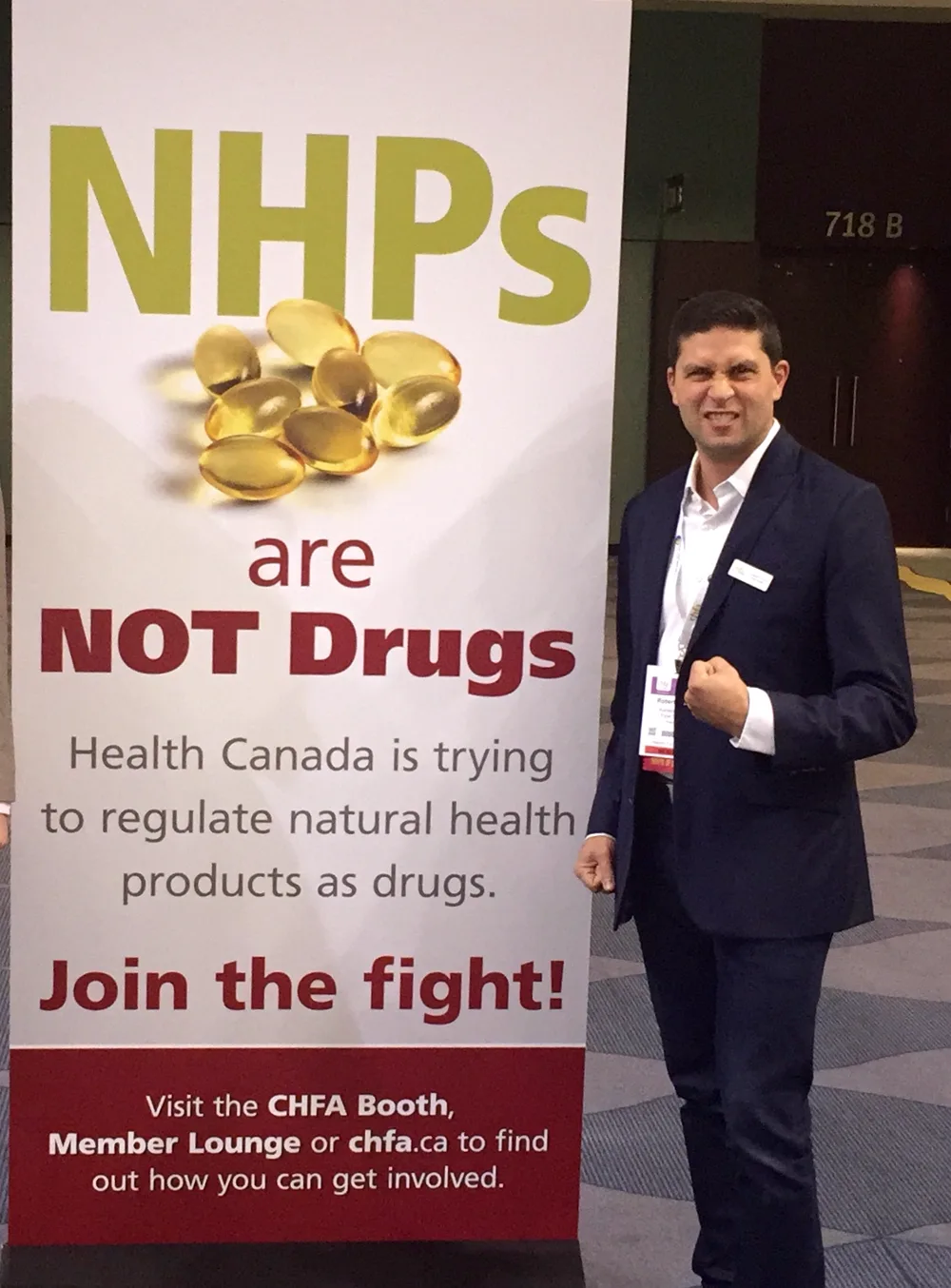
I didn't get recruited onto a board through some quiet network of people who already sit on boards. I applied.
I was at a stage where I wanted to expand my horizons and sharpen my business skills beyond the four walls of my own company. I knew a few people on the board of the Canadian Health Food Association — Canada's largest natural health products association — and it sounded interesting, exciting and new. As it happened, they were looking for retailers. I had no board experience at all, and I said so; what I heard back was that CHFA took the education of its directors seriously. They did. Six years later — including two as President — I'd rank it among the most valuable business educations I've ever had.
The first surprise: sitting on your hands
The biggest early adjustment had nothing to do with policy or procedure. It was the shift from doing the work to overseeing it.
I'd spent my whole career as the person who builds the thing — who steps in when it matters and works the problem directly. A director's job is different: set direction, ask the right questions, and then trust the association's executive team to run the operation. Learning to extend that trust — and watching a good executive team earn it — rewired something in how I thought about leadership. They were genuinely good: they split the business into clear chunks, ran disciplined meeting rhythms, and reported in a way that let a room of busy operators govern effectively in a handful of meetings a year.
And here's the part I didn't expect: the flow of value reversed. I joined to contribute a retailer's perspective, and I did. But I took home more than I brought. The meeting rhythms — annual, quarterly, monthly, weekly, each with its own altitude. The discipline of structured strategic conversations. The rigour with which a good board runs. I ported all of it back into Kardish, and my own business ran better because of how the association ran its boardroom.
The room itself
CHFA's board was unusual and better for it: retailers and manufacturers at the same table, small businesses and large ones, drawn from across Canada. That mix could have been a recipe for gridlock — retailers and their suppliers don't automatically want the same things. Instead it produced something rare: a full-spectrum view of an entire industry, from people who each saw a different part of it up close. I met some exceptional people in that room. It gave me a pulse on the industry I simply could not have had as one retailer in Ottawa, and it sharpened how I planned and grew my own business.
A concrete example: when the regulator came in hot
The work I can speak to most usefully is the ongoing relationship with Health Canada over natural health product regulation — because it shows what an industry association is actually for.
There was a particularly tumultuous stretch when Health Canada moved aggressively to expand the regulatory burden on NHP manufacturers, retailers — essentially every business in the category. From where industry sat, it seemed to come out of left field, with little justification offered for the scale of change being imposed, and the consultation felt like an afterthought.
Here's what I could contribute that a policy paper couldn't: I could spend a day on the floor of one of our stores. Talk to the actual consumers of these products. See first-hand what confused them, what concerned them, and — just as important — what wasn't a problem in the real world, whatever it looked like from a desk in Ottawa. The regulator's approach was, to put it plainly, out of touch with the reality I could observe any day of the week among the people the rules were meant to protect.
I brought that floor-level perspective to the board, and it fed directly into how CHFA devised its strategy and consulted with government — putting what members and their customers actually experienced in front of the people writing the rules. That's the unglamorous, essential work of industry governance: making sure regulation is informed by the reality it intends to govern. I was able to help tremendously there, and it's some of the work I'm proudest of from those six years.
Learning to lead a board, not just sit on one
Over my tenure I moved up — eventually serving as President of the board. Leading a board is its own discipline, distinct from leading a company: the preparation before every meeting, the facilitation that gets a diverse room to an actual decision, building consensus without flattening disagreement, and handling the conflicts and hard conversations that come with any group of strong-willed people who care about the outcome. Nobody is your employee. Authority comes from process and trust, not position.
Operating a business teaches you to drive. Governing an industry teaches you to steer — lighter hands, longer horizon, more people at the wheel. Six years at that table taught me both have their place, and taught me which one a given problem actually needs. That distinction has been useful in every piece of work I've done since — and it's a big part of why board and advisory work is where I want to keep contributing.