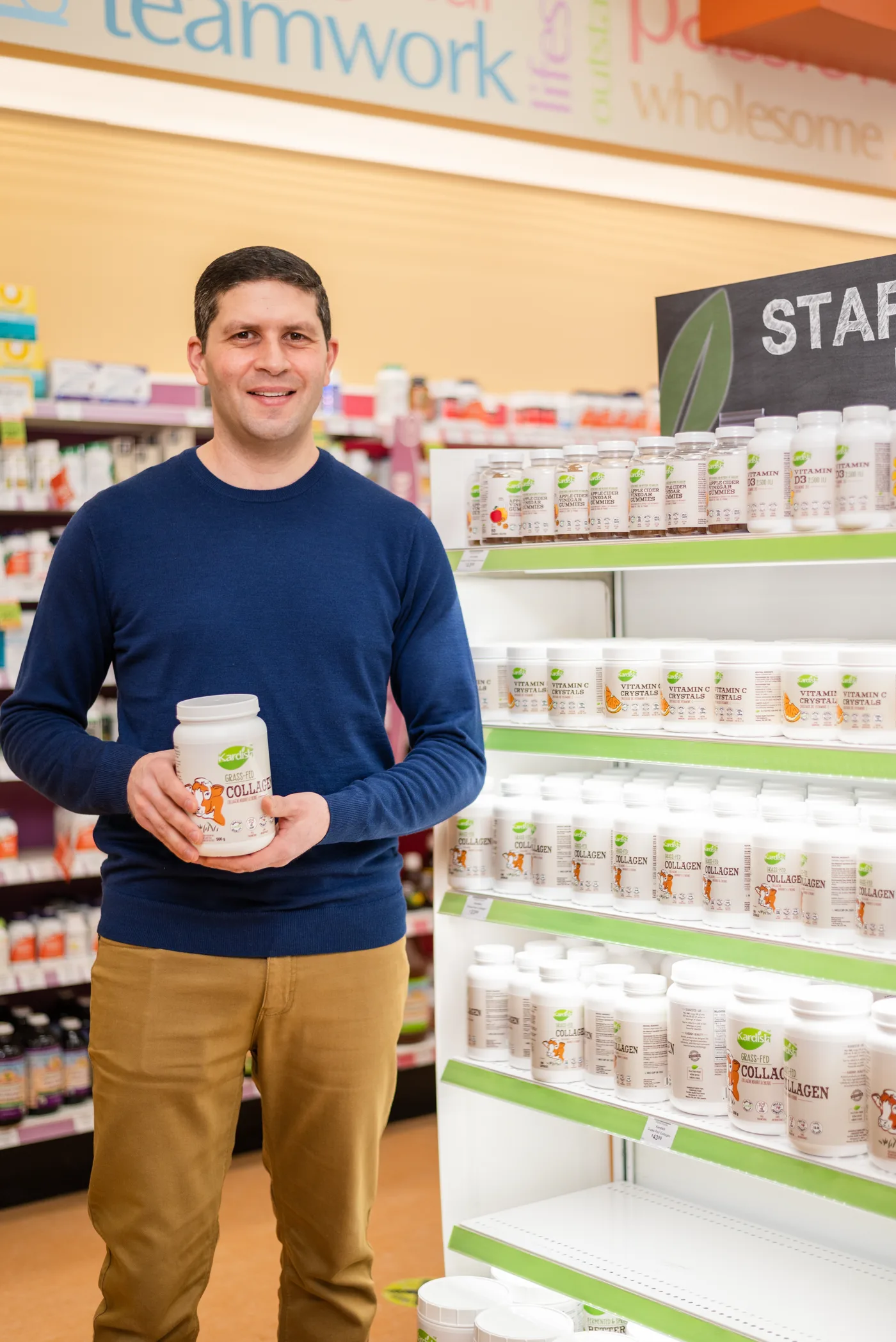
Our private label — which grew to 130 products and $5M in annual sales — did not start with a brand strategy deck. It started with a bottle of oil of oregano and a question from a sales rep.
He worked for a manufacturer, and one day he asked me, almost in passing: would you ever want this under your own name? We could make it for you.
I knew exactly how much oil of oregano we sold — it was one of the most popular products in our stores. So the math was quick, and it was what I came to think of as a triple win: more margin for us, a lower price for our customers, and our name on a product people already trusted. I said yes. The supplier handled most of the heavy lifting, we worked through pricing and the details, and it was about as turnkey as these things get.
It took off immediately. Customers loved it. Our staff loved it — they understood instinctively that it was the same quality and everybody was getting a better deal, which made it easy to recommend honestly. And that early, easy win did something more important than the revenue: it got us thinking. If it worked for one product we already knew how to sell, what else would it work for?
The answer, over the following years, turned out to be 129 more.
What "private label" actually means at 130 SKUs
One turnkey product is a side project. A 130-product brand is a second business running inside your first one — and nobody hands you a playbook for that.
Every product meant development decisions, supplier sourcing, packaging design, pricing and promotion strategy, and — because we sold natural health products in Canada — regulatory compliance under Health Canada's NHP licensing regime. It meant training staff well enough that a Wellness Advisor on the floor could explain, honestly and specifically, why the Kardish version earned a place next to the national brand. We were a retailer learning to think like a manufacturer while still being judged, every day, as a retailer.
Two lessons from those years stand out — one we should have seen coming, and one I never saw coming at all.
Lesson one: the day the shelves went empty
In the early years we had our eggs in one basket: a single supplier responsible for roughly ninety percent of our products. Then that supplier went through some internal turnover — I never knew exactly what was happening inside their walls — and they started dropping balls. Missed timelines. Late deliveries. And suddenly we were out of stock on some of our most popular products.
I can tell you that customers do not accept out-of-stocks — and I understand, because I'm a consumer too. People do their research, they make a trip to your store specifically for that one product, and they expect it to be on the shelf. When it isn't, it genuinely ruins their day, and they tell you so. Our staff were the ones on the front lines absorbing that frustration, and it was hard on everybody.
The fix wasn't one thing; it was several. We developed backup suppliers. We invested more, not less, in the relationship with our primary supplier — because their challenges were our challenges, and getting to the bottom of theirs was the fastest way to solve ours. We ordered sooner, watched our stock position much more carefully, flagged risks internally earlier, and held more inventory on products that mattered. None of it is glamorous. All of it is the difference between a brand customers rely on and one they learn to doubt.
If you're building a private label: diversify your supply before you need to. You will need to.
Lesson two: the thing nobody warned me about
Here's the one that genuinely caught me off guard — not a supply problem or a regulatory problem, but a relationship problem.
When we started our private label, almost no one else in our corner of the industry was doing one. And our existing vendors — the national brands we'd stocked and championed for years — reacted badly. Backs went up against the wall. Some were worried, some were upset, and some lashed out at us directly. The strength of that response shocked me, because we had done it the respectful way: we told our key vendors well in advance, and we even offered to work with them on our private label products. It didn't matter.
The irony wasn't lost on me. Many of those same brands had spent years telling us "we're committed to health food stores only — we'll never go mass market." And then, gradually, they went mass market. Some started selling direct to consumer. They reacted to our private label exactly the way retailers like us had reacted to those moves — and honestly, I understood it. They could see precisely which of their sales we would absorb, and eventually we did.
But the landscape was consolidating, competition was multiplying, and we had to do what was best for our business — the same calculation they had made. I'm still not sure how we could have smoothed it over better; we genuinely tried. What I can do is tell you it's coming, so it doesn't blindside you the way it did me. As more retailers move into private label, I suspect both sides will get better at navigating it. But go in with your eyes open: the hardest part of building a brand inside a retail business may not be the building. It may be managing the partners who suddenly see you as a competitor.
What I'd tell you if you're about to start
Start with a product you already know sells — your own sales data is the cheapest market research you'll ever get. Take the turnkey win and use it to earn the organization's belief. Protect your supply chain before it fails, because it will. Brief your vendor partners early, and brace for their reaction anyway. And remember that the brand isn't the label on the bottle — it's whether the person on your floor can recommend it honestly, and whether it's on the shelf when a customer makes the trip for it.
We built ours to 130 products and $5M a year inside a business that was already running flat out. It was harder than anyone tells you, and worth more than the margin. The margin was the triple win. The real prize was owning, end to end, something customers trusted with our name on it.